

A London taxi is for immediate hire. The driver is expected to take the job without stopping to study a map. That is what the Knowledge of London is for. Transport for London dates the requirement to 1865. It is still the gate to a black-cab badge, and TfL still says there is no fast track.
There are two badges. A green badge is All London: you may ply for hire anywhere in Greater London. A yellow badge is one of nine suburban sectors. Most of what follows is the green-badge path, which TfL says typically takes three to four years. The yellow-badge path is shorter, and it skips two of the early exams. This TaxiFeed piece points to a short film of candidates out on the road.
Where the test came from
TfL’s own account is short. The Knowledge was introduced as a requirement in 1865. Histories of the trade put the pressure earlier. Exploring London records the usual version: visitors to the Great Exhibition of 1851 complained that cabmen did not know the way, and Sir Richard Mayne, a commissioner of the Metropolitan Police, made a formal test of it. The Public Carriage Office, which examined drivers for the police, now sits inside TfL.
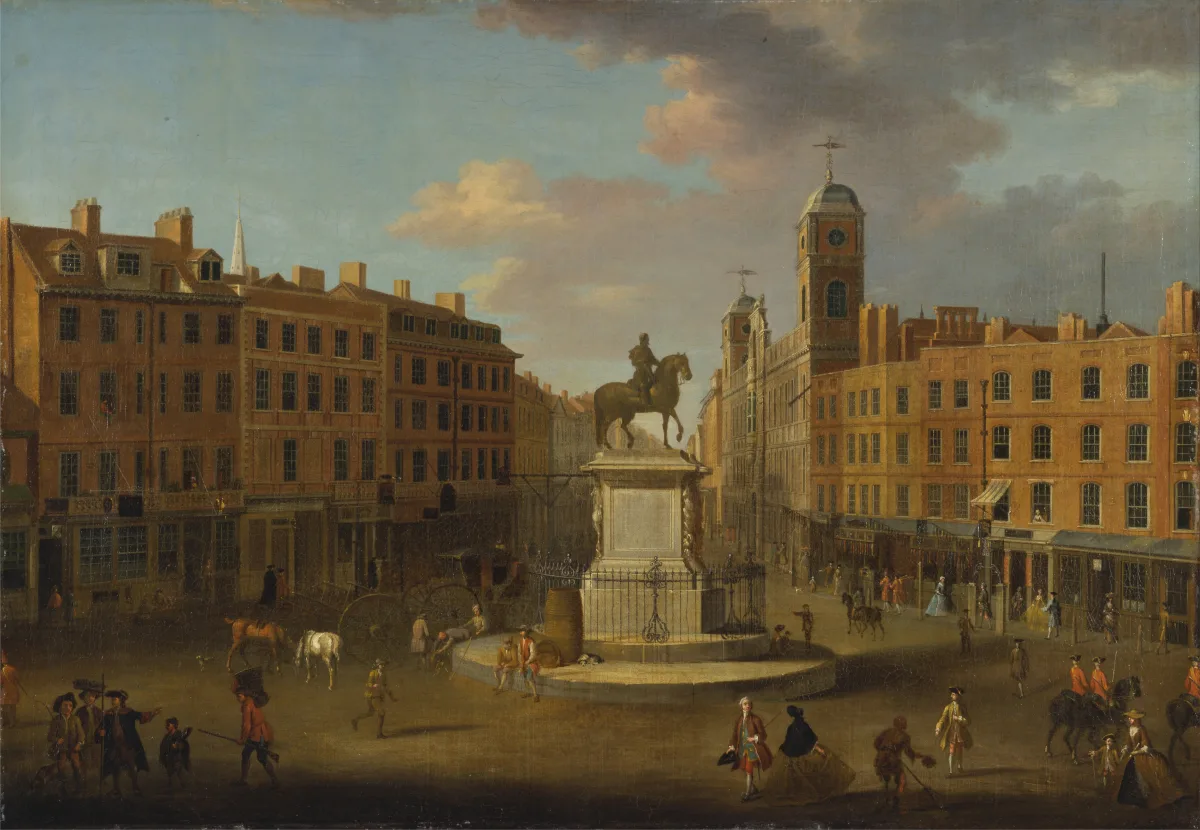
The idea has not moved. A licensed taxi is available for immediate hire, so the candidate has to call a route from memory, fast enough to be useful in traffic. The machinery around that idea has moved. What used to be an oral exam in front of the police is now a pack, a talk, a self-assessment, a written paper, three stages of appearances, a final appearance, and then the licence. Appearances can be held on Microsoft Teams and kept as an audio recording for three months.
How a run is learnt
The studying does not start in an exam room. After the character and medical checks, TfL sends an introductory pack and invites you to a talk. The pack includes the Blue Book, the Guide to Learning the Knowledge, in an All London edition or a suburban one. The talk is at TfL’s offices, given by a Knowledge examiner, and it lasts about an hour. You cannot go on until you have been. The Blue Book is the syllabus. For All London, Annex B lists 320 runs inside a six-mile radius of Charing Cross, the King Charles I island in the station forecourt. The learning guide puts that area at about 113 square miles. A suburban Blue Book is the runs for one sector, and the list is longer or shorter depending on the size of the sector.
The guide treats four things as essential. The Blue Book. A map at a scale of at least three inches to the mile. A reliable moped, scooter or bicycle, with the proper kit, though a car is allowed. And a call-over partner.
The bike is how the miles are done. You are out on the street the run actually uses, not on a training circuit. A moped or scooter can use bus lanes and does not pay the Congestion Charge. It still has to meet the ULEZ rules or pay the charge. If you do not already hold a moped or scooter licence you need a Compulsory Basic Training certificate, and that certificate lasts two years. TfL also offers Knowledge candidates a free annual Santander Cycles pass, normally £120, with unlimited rides of up to 60 minutes for a year. The request goes to Knowledge@tph.tfl.gov.uk with your name and your Knowledge reference or postcode.
A call-over partner sits with you and asks questions the way an examiner will, then listens while you call the run aloud. The guide says it is best if they are doing the Knowledge as well, or have already finished it. A lot of that happens at a Knowledge school. Schools are private businesses, not part of TfL. Some only take All London students. In a school you can sit a class, buy maps and route sheets, and find someone to call over with. TfL publishes a list and does not regulate it. Calling over is not done at Baker Street. Baker Street is where you are tested on whether the calling has stuck.
Each run starts on the map. You find the start and the finish named in the Blue Book. You work out the shortest route with a computer measuring tool, a ruler, a piece of string, or all three, and you write down the legal roads that stay closest to that straight line. You do that for every run in the book.
Then you go there. At the start, before you ride the run, you search the streets around the point: a quarter of a mile for All London, half a mile for a suburban sector. You are looking for anywhere a passenger might ask to be taken, and for the roads that join those places to the run. All London points in that circle have to stay inside the six-mile radius. You then ride the run and note the same kind of places along it. At the finish you search the circle again. Then you learn the run backwards. The way back is often a different set of streets, because of one-ways and banned turns. The guide calls the two circles and the two directions a dumbbell of Knowledge.
Its worked example is Islington Police Station to the British Museum. Outbound, you leave on the left into Tolpuddle Street and set down on the right in Great Russell Street, by way of Gray’s Inn Road and Russell Square. The return cannot simply be that route reversed. It comes back through Bloomsbury, Theobald’s Road, Rosebery Avenue and Amwell Street. Both directions, and both circles, count as knowing the run.
Books, films, apps and a navigation system are allowed. The guide says they are not a substitute. The only knowledge that counts is the kind you get by travelling the run and visiting the points yourself.
Tom the Taxi Driver, a working London cabbie, filmed that same routine.
What you learn at each stage
All London does not take on the whole book at once. You start with the first five lists, 80 runs, learnt as dumbbells out on the bike and then called over until you can say them. When those 80 are done you sit a compulsory self-assessment at TfL’s offices. It can be as soon as you like, but it must be within six months of starting. The paper is the same shape as the later written exam. You sit it under exam conditions, then you are given the answers and you mark it yourself. An examiner talks through them. TfL does not record the score. It is there so you can tell whether the method is working. If you are satisfied, you go back out and learn the other 240 runs, still inside the six-mile circle.
The written exam waits until all 320 are learnt. It has to be within two years of the introductory talk, and no later than 18 months after the self-assessment. You can sit it earlier if the runs are ready. Reverse runs are not on this paper. Five questions ask you to pick the shortest of three routes, and 25 ask you to place a point you should have found while learning. Each route question is worth 10 marks and each point is worth two, so the paper is out of 100. The pass mark is 60. You book it by emailing TPHKnowledge@tfl.gov.uk. Give 48 hours’ notice if you cannot attend, or the fee is kept. Suburban candidates do not sit the self-assessment or this exam. The guide gives them up to a year to learn their sector’s runs, by the same dumbbell method, with the wider half-mile circles.
Stages 3, 4 and 5 are not a new map. They examine the same six miles, or the same sector, and the studying changes shape as the appearances get closer together. At Stage 3 you are still on Blue Book runs, and on the big stable points: hotels, hospitals, stations, courts. Between appearances, about 56 days apart, you keep riding and calling those runs. You are allowed to correct yourself in the appearance. At Stage 4 you stop treating runs as separate lines and start joining them. The study is combinations, including a road closure or more than one drop, and in the appearance you may not go back and fix a mistake. Appearances are about 28 days apart. At Stage 5 the points have to be current, so the work is keeping the map up to date: a renamed hotel, a new attraction, what is on at the Chelsea Flower Show, Winter Wonderland or London Fashion Week. About 21 days apart. A suburban candidate at this stage can also be asked for major places in the neighbouring sector, because a taxi driver can be required to accept a hiring of up to 12 miles inside Greater London.
You do not learn the suburban runs until central London is secure. The March 2022 guide says All London candidates then learn 27 routes in Annex C, from the centre out to the suburbs and to and from Heathrow, in time for the Stage 6 appearance about six weeks after the last Stage 5. TfL’s public page currently describes this as an additional 25 routes. The list in the pack is the one to ride. A suburban candidate does the opposite journey at the end. At the close of Stage 5 they are given a list of runs from a major rank in their sector to the big transport hubs in central London, and they learn those, plus Heathrow and London City Airport if either sits outside the sector. Same method: measure it, ride it both ways, learn the points at each end, call it over.
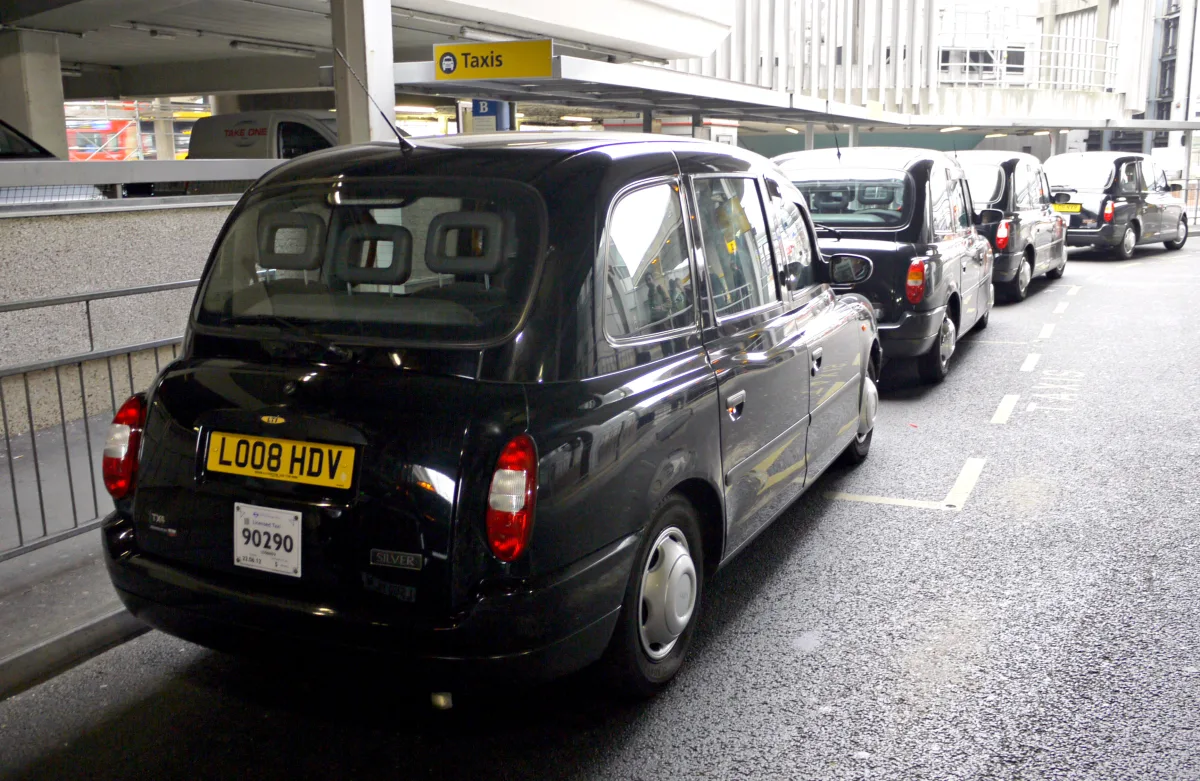
One candidate who kept a diary through the whole thing, Black Cab Knowledge Guy, passed the last of the oral stages on 25 October 2017, after five years and three months. He reckoned on more than 10,000 miles, and at least 25 hours a week for the last three of those years. For those three years he got up an hour early and called the Blue Book before the rest of the day began. Once that last oral stage was behind him, he wrote down what had got him through: call those runs every day, weekends and holidays included, join a school, and practise point-to-point from the daily sheets with more than one partner. The green badge was still to come. He still had the suburban runs, a medical, the criminal-record check and the cab driving test.
The appearances
Once the written paper is out of the way, the rest of the exam is oral. One examiner, one candidate, at 210–212 Baker Street, or on Teams. The first appearance lasts up to 30 minutes and is based on Blue Book runs. Later ones last up to 20 minutes. The guide asks you to arrive at least 20 minutes early, and to look as you would if the badge were already on the dashboard. You bring the appointment card. It carries your grades and the names of the examiners you have already seen.
The examiner names two points. You say where each one is. Miss one, and you are offered another, with a mark deducted each time. Then you call the run: every street, every change of direction, how you leave, and how you set down. The shortest distance is the right answer. Traffic does not count. A banned turn, a no-entry, or the wrong way up a one-way street scores zero for that run. So does giving up halfway. Setting down where a cab cannot stop is a fault, and so is a set-down you cannot justify on safety. A good appearance is four runs. Each is marked out of 10, so the appearance is out of 40. If the clock runs out after three, you are marked on the three you finished. Examiners rotate. A change to a road or a point is given four weeks before it can be asked, except for temporary events at Stage 5.
The learning guide turns those marks into a grade. A score of 36 to 40 is an A, worth 6 points. 32 to 35 is a B, worth 4. 24 to 31 is a C, worth 3. Under 24 is a D, worth nothing. You need 12 points to leave the stage. Two As will do it. So will three Bs. Four Ds on the same stage and you start that stage again. You can ask, in writing, to drop back. TfL can also send you back if an audit decides the grades were wrong. Each appearance ends with a feedback sheet showing where the marks went. TfL says that, on average, it takes four scoring appearances to bank enough points to move on. You have three years to finish Stage 3, two years for Stage 4, and one year for Stage 5.
Stage 6 is a single appearance. For All London it is those suburban runs, five questions, at least one of them involving Heathrow in the guide’s version, and all of them have to be satisfactory. For a suburban candidate it is four runs into central London, all satisfactory, then ten central points of which six must be right, including how to set down and leave. Fail it, and a resit can be as soon as two weeks later, depending on the score and how many times you have sat it.
Stage 7 is the licence. You apply, attend the pre-licensing talk, and the badge and the licence are handed over if the rest of the checks are in order.
How long it takes
TfL’s figure for All London is still three to four years. That is a planning number, not a slot you can book. The hard limits are the ones in the guide: six months to the self-assessment on the first 80 runs, two years from the introductory talk to the written paper, three years on Stage 3, two on Stage 4, one on Stage 5. How much of that you use depends on how many hours you can put in on the bike and at call-over. The guide says so in terms.
The people who finish are a smaller group, and TfL has published their averages. In a freedom of information reply dated 11 November 2025, the average time for candidates who passed was 49 months in 2015, 63 months in 2020, 53 months in 2024, and 38 months in 2025 up to September. Those figures cover only people who got through in that year. They say nothing about candidates still on the Blue Book.
The same reply shows a thinner finish line, and a start line that has picked up again. TfL recorded 1,315 new applicants in 2015 and 775 completions. Applicants fell to 174 in 2021. Completions fell to 110 in 2024. In 2025, to September, there were 605 new applicants and 91 completions. At that point 1,260 candidates were in progress.
What it costs
The appearance fee is not charged every time you sit down. On TfL’s current scale it is a one-off £425, paid at the first appearance, and it is not refunded. The All London written exam is £225 each time you sit it. Both of those rose on 9 March 2026, from £400 and £200. The licence application is £138, and that is not refunded either. The grant of the licence, if you get there, is £205. Those two rose on 1 June 2026, from £120 and £180. The figures are on the licence application page and in TfL’s fee notice.
The checks sit around that. An enhanced DBS is £52 online or £54 on paper. The Update Service is £16 a year. The Post Office Check and Send counter fee is £7.15. The medical is about £80, paid to the GP. The taxi driving test is listed at £92.94 in normal hours and £112.34 in the evening or on a Saturday, with the wheelchair section at £50. Toward the end, the SERU assessment, which covers English as well as safety and the regulations, is £40 for a first attempt and £30 for a resit. The driver handbook treats SERU as part of being licensed.
None of that is a school, a scooter, fuel, CBT, or a year of shifts you did not work while you were out learning runs. TfL does not price those.
The badge, and a side effect
A green badge is the All London licence. A yellow badge is one sector. The nine, as the learning guide lists them, are Enfield, Haringey and Waltham Forest; Barking and Dagenham, Havering, Newham and Redbridge; Bexley, Greenwich and Lewisham; Bromley; Croydon; Merton and Sutton; Hounslow, Kingston upon Thames and Richmond upon Thames; Ealing and Hillingdon; and Barnet, Brent and Harrow.
Yellow is not a lighter copy of the same map. It is a smaller map, learnt the same way, with central London and the airports examined at the end.
While you are on it, a conviction, a caution or penalty points have to be reported to TfL. The guide says that failing to do so can put your fitness to be licensed back under review.
The studying shows up on a brain scan. In 2000, Eleanor Maguire’s group at University College London reported that licensed London taxi drivers had a larger posterior hippocampus than people who did not drive a cab, and that the difference tracked years of navigating. The paper is Navigation-related structural change in the hippocampi of taxi drivers. A 2011 follow-up scanned candidates before and after. Grey matter in that same region increased in the people who qualified. It did not increase in the people who trained and failed. That paper is Acquiring the Knowledge of London’s layout drives structural brain changes. TfL does not issue the badge for the scan. The scan is what is left of having to keep the city in your head.