

A speeding ticket feels like a private nuisance until you drive for a living. The same three points sit on three different ledgers. One decides whether you are still allowed to drive at all. One decides whether the insurer will pay. One decides whether the council still thinks you are fit to carry the public. They do not start on the same day, and they do not run out together.
The points are not written on the photocard. In Great Britain the paper counterpart went years ago. The court, or the fixed-penalty office, tells the DVLA. You can see the live record, and the date each endorsement comes off, by viewing your driving licence.

What the points do
Each endorsement has a code and a number of points, from 1 to 11. Most codes stay on the record for four years from the date of the offence. Drink and drug driving codes stay for 11 years from the date of conviction. The full list is on the endorsement codes page.
That is not the same as the ban. If the points for offences committed within three years reach 12 or more, the court must disqualify you, unless it finds grounds to mitigate. The ordinary minimum is six months. A second totting-up disqualification within three years is at least 12 months. A third is at least two years. The power, and the limits on it, are in section 35 of the Road Traffic Offenders Act 1988.
The court can refuse to ban you, or shorten the ban, for exceptional hardship. Ordinary inconvenience is not enough. Losing the badge, on its own, is the thing the court is often told not to treat as exceptional, because it is the expected result of a ban. The same circumstances cannot be used again if a court has already relied on them in the previous three years. And the points still go on the record. A court that lets you keep the driving licence has not wiped the 12 points the council can see.
A ban of 56 days or more means you apply for a new licence before you drive again. Under 56 days, you wait it out and the old licence revives. A Great Britain ban is also a ban in Northern Ireland and the Isle of Man, and the other way round (driving disqualifications).
New drivers are on a shorter fuse. Six or more points within two years of passing a first test, including points already on the provisional, and the licence is revoked. You apply for a new provisional and pass theory and practical again. There is no fresh two-year period just because you later pass a test in another category. The rules are the Road Traffic (New Drivers) Act 1995.
A speed-awareness course, if you are offered one and you finish it, means no endorsement. There is then no DVLA point to declare. If your council’s conditions mention courses by name, tell them anyway.
A parking ticket or a bus-lane penalty charge is not a driving-licence endorsement. It does not add DVLA points. A pile of them can still interest a licensing officer, but it is a different complaint.
The ones that hurt on the job
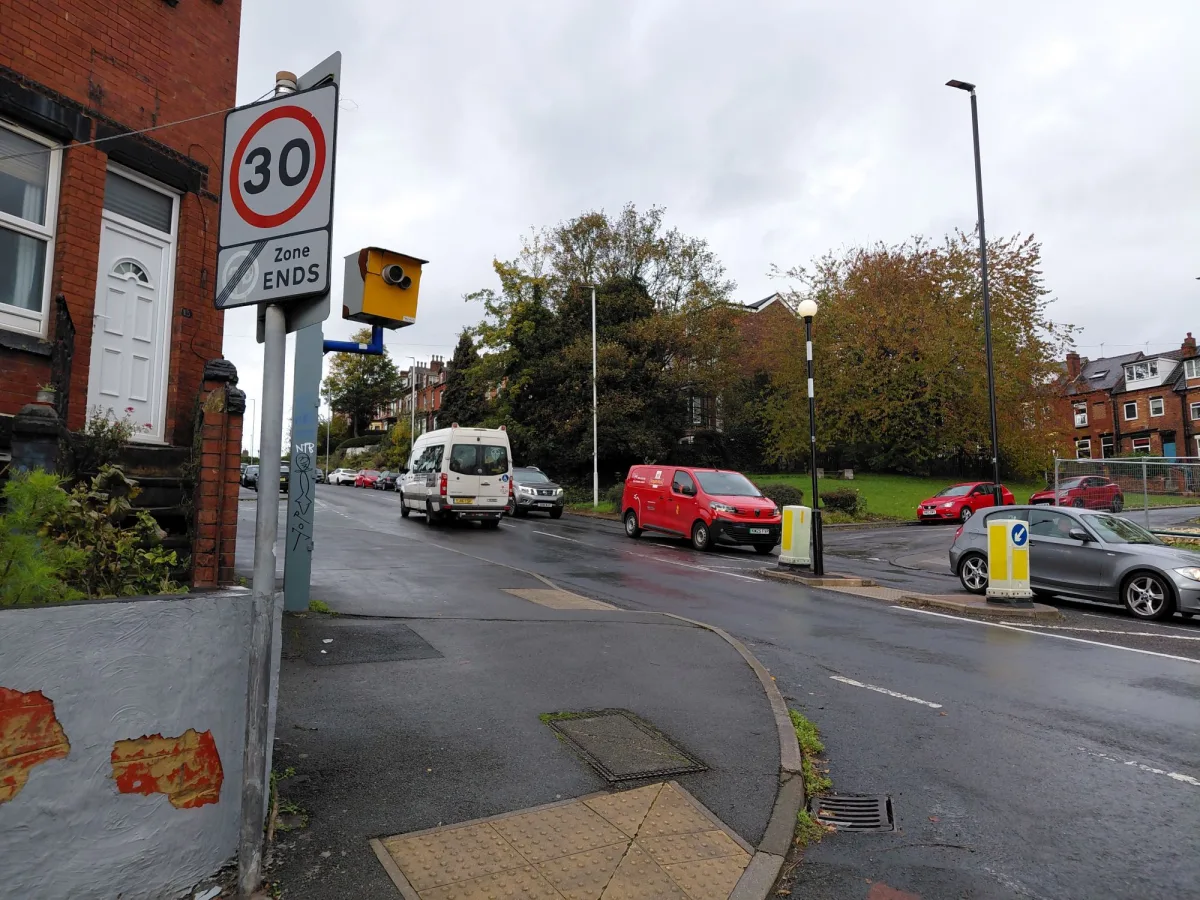
A fixed-penalty speeding offence is three points. In court the same family of codes, SP30 and the rest, can be three to six, and the fine is higher on a motorway. The bands are in Highway Code annex 5.
Holding and using a phone, sat nav or any device that can send or receive data is six points and a £200 fixed penalty. In court the fine can reach £1,000, and the court can ban you. Six points inside the new-driver window revokes the licence on the spot (mobile phone law).
No insurance, code IN10, is six to eight points and stays for four years from the offence. The court can also ban you, and the fine is unlimited. Defective tyres, brakes or steering are typically three points each. Careless driving is three to nine. Failing to stop or to report an accident is five to ten. Failing to name the driver, MS90, is six.
One careless drive or one phone can move a working driver from “a warning” to “a committee” in a single afternoon. Three minor tickets across three years can do the same, more slowly.
Telling the insurer
There is no GOV.UK rule that every driver must ring the insurer on the day the points are added. The deadline is in the policy.
A private-car policy often asks again only when you renew, change the car, or change a driver. A taxi or private-hire policy is a business contract, and those wordings much more often say you must tell them as soon as you are convicted or as soon as you accept a fixed penalty. Read the conditions headed something like “changes we need to know about”. If they say immediately, immediately means before the next shift, not at renewal.
A ban is in a different category. You are no longer allowed to drive. The insurer has to be told, because the cover is for you driving and they may have to cancel it. Driving while disqualified, or driving after they have cancelled, is a fresh offence.
When you take out or renew cover you have to answer the questions with care. For a consumer policy that duty is in the Consumer Insurance (Disclosure and Representations) Act 2012. For a business policy the Insurance Act 2015 expects a fair presentation. “No” when the honest answer is “three points for speeding” is a misrepresentation. If it was deliberate or reckless, the insurer can treat the policy as if it never existed. That is how a driver discovers, after a crash, that the passengers were not covered.
Insurers can already see the codes. GOV.UK says the DVLA keeps them so insurers and the police can view them. At a quote, the usual route is MyLicence: you give your driving-licence number and they check. Waiting until renewal to hide a mid-term endorsement rarely works, and it is the claim that punishes it.
The endorsement outlives the totting window. A speeding code can stop counting towards the 12 long before it drops off the four-year record. Expect the proposal form to ask about it anyway. Nobody can honestly quote you a single “points loading”. Each insurer prices the code, the age of it, and the rest of the record in its own way. What you can count on is that an undeclared IN10 or a drink-drive code is treated as more serious than an old SP30.
Someone else’s car
The owner saying yes is permission. It is not insurance.
Your own comprehensive policy insures the car named on it. A “driving other cars” extension, if you have one at all, is a separate line on the certificate, under the people entitled to drive. It is often third party only, often limited to an emergency, and often closed to anyone who already has points, is under 25, or owns another car. Damage to the borrowed car is then not covered. Damage you do to everyone else might be.
Two limits matter more than the small print on a private car.
Hire and reward is a use, not a mood. A private policy, including a driving-other-cars extension, does not cover you once a passenger is paying, or once you are plying or waiting for a hiring. The moment the job is a taxi or private-hire job, you need a policy that says so.
The other driver’s taxi policy covers the drivers it names, or the class it describes, such as “any licensed driver of this operator”. If you are not in that class, you are uninsured in their cab even if you hold your own badge and your own policy on your own car. Their policy can also exclude drivers with a given number of points. Your new SP30 can push you out of their “any driver” clause overnight.
Borrowing a mate’s private car on a day off is the same exercise, done before you turn the key. Read your certificate. Read theirs. If neither covers you for that use, it is an IN10, six to eight points, and a licensing case as well as a criminal one. Police can seize the car.
Telling the council
You tell them. The police do not do it for you as a favour, and a DBS update is not a substitute for a motoring endorsement.
The English standard, in the Department for Transport’s statutory taxi and private hire standards, is that a licence holder should have to notify the authority within 48 hours of an arrest and release, a charge or a conviction for any motoring offence, and for sexual offences and offences of dishonesty or violence. An arrest in that list should trigger a review of whether you are still fit to hold the licence. The same page says that review is not an instruction to take the badge. A single minor traffic offence may not justify revocation if the authority still finds you fit and proper. What the standards do treat as a problem is silence. Failing to disclose an arrest, once the authority hears of it another way, can be read as a question of honesty whatever the court eventually does.
That 48-hour line is the English expectation. It is not yet the wording in every badge. Wales, Scotland and Northern Ireland licence drivers under their own laws. Northern Ireland also uses different endorsement codes. A driver licensed by a district council, a Transport for London badge, a Scottish civic licence or a Northern Ireland taxi driver’s licence each needs the condition printed on that licence.
What happens next is a fresh “fit and proper” decision, on the balance of probabilities. The tools are a warning, a requirement to do a course at your expense, a suspension, a refusal at renewal, or revocation. Where the council thinks the public need protecting at once, an English district council can suspend or revoke with immediate effect. You can appeal, and the letter will give the deadline, but an immediate decision means you are off the road while that appeal is pending unless a court says otherwise.
Councils also run their own penalty-point schemes for things like a missing badge, a dirty plate or a refused guide dog. Those points never appear at the DVLA. Twelve of them can still put you in front of a committee. Do not add them to your speeding points, and do not ignore them because they are “only council points”.
How far the rules differ
Transport for London brought the 48-hour rule in on 1 July 2024 for arrests, charges, cautions and convictions, and it includes every driving offence that puts points on the DVLA licence. A fixed penalty must be reported within 48 hours of accepting it and paying. For taxi drivers that applied at once. For private-hire drivers it is a condition of licences granted from that date. Drivers still on an older private-hire licence were, at the time of the notice, legally on the old 21-day rule until renewal, and were told to use 48 hours anyway (TfL notice).
On the points themselves, TfL’s driver policy says nine or more means a review of what the offences were, and the application may be refused. Anyone who is licensed with nine or more is warned that more points are likely to cost both the driving licence and the badge. Twelve or more and TfL will not license. After a six-month totting ban, a licence will not normally be issued until at least six months after the ban ends. If previous bans made the totting disqualification longer than six months, the wait is normally at least 12 months after it ends (TfL driver policy).
North Herts, in the policy it adopted on 1 April 2025, splits the clock. An arrest for a motoring offence, among other serious matters, must be notified within 48 hours, whether you were released or charged. A conviction, a caution, or a fixed penalty you have accepted must be disclosed within seven days. The policy treats that accepted fixed penalty as a conviction for this purpose. Missing the deadline is a disciplinary matter on its own, and the council also checks DBS updates and can act if it finds something you did not send (North Herts policy).

Solihull’s 2026 guidance puts minor motoring matters on a scale. Up to three points, a written warning stays on the file. Four to eight, a written warning and possibly a course you pay for. Nine to eleven, a fit-and-proper decision, with suspension of anywhere from three to 12 months on the table. Twelve points, revocation or a refusal to renew. For totting up, an existing licence will normally be revoked, and a new one will not normally be granted for seven years after the disqualification ends. If the court did not disqualify you, that seven years runs from the conviction. A phone offence, which is six points, sits in Solihull’s “major” list because the threshold is an offence that can draw four or more points (Solihull guidance).
Read those three side by side and the pattern is the point. The same three-point speeding ticket is a 48-hour email in London, a seven-day disclosure in North Herts, and, if it takes you from nine points to 12, a revocation in Solihull and a refusal at TfL. The same exceptional-hardship win that saves the driving licence can still leave Solihull counting seven years, because the points were not removed. No national table overrides the condition on your own badge. If you are licensed by more than one authority, each one gets its own notice, on its own deadline.
The day they land
Look up the code and the offence date, not just the number of points. Note where that offence sits against the others in the three-year window.
Read the insurance condition the same day. If it requires notice, give it, and keep a copy. If it only asks at renewal, diarise the renewal anyway, and do not take out a temporary policy or drive a different car in the meantime without telling that insurer too.
Tell the licensing authority inside its clock, with the code, the date, the points and the court or fixed-penalty reference. Do this even when you think three points “will not matter”. The failure to tell them is a separate mark against you.
Do not borrow a car, and do not take a shift in someone else’s plated vehicle, until both policies say you are covered for that use. Permission from the owner is not the certificate.
If the new points take you to nine or more, or to six inside two years of your first test, get advice before you accept a fixed penalty that you could take to court, and before you drive another mile for hire. The cheap choice on the day is sometimes the one that ends the badge.