

For most of the last decade, diesel was the trade’s workhorse fuel: thirsty miles, long shifts, and a cost that rose and fell with the oil market but rarely rewrote a whole year’s maths overnight. That comfort has gone. On 2 October 2026 the RAC reported the UK average diesel pump price at 200.01p a litre — the first time the national average has broken £2. A typical 55-litre fill now costs about £110, nearly £32 more than on 28 February, the day the Middle East conflict that sparked this crisis began.
Petrol has hurt too — 174.71p a litre on the same RAC reading, roughly 42p up on the pre-war figure — but diesel has carried the sharper pain. For taxi and private hire drivers, hauliers, farmers and anyone whose living is measured in miles, that is not a headline. It is the gap between what the tank costs on Monday and what the week’s work can still pay for by Friday. Drivers comparing local forecourts can use TaxiFeed’s Live Fuel Prices tool.
When the climb began
The fuse was lit at the end of February. On 28 February, US and Israeli military operations against Iran began. Within days, the war was no longer only about air strikes and diplomacy — it was about the Strait of Hormuz, the narrow channel between Iran and Oman through which roughly a fifth of the world’s oil and liquefied natural gas normally passes, and close to a quarter of seaborne oil trade.
Oil markets did not wait for the first tanker to burn. On the last trading day before the strikes, Brent crude — the international benchmark that feeds into UK pump prices — closed at $71.32 a barrel. By 2 March it was $77.24, an 8% jump in two sessions, according to a US Congressional Research Service report. Goldman Sachs Research put the early “risk premium” at about $14 a barrel by 3 March: money traders were already demanding simply because Hormuz might stay closed, damaged or too dangerous to sail.
Hormuz: threats, attacks and the barrel price spiral
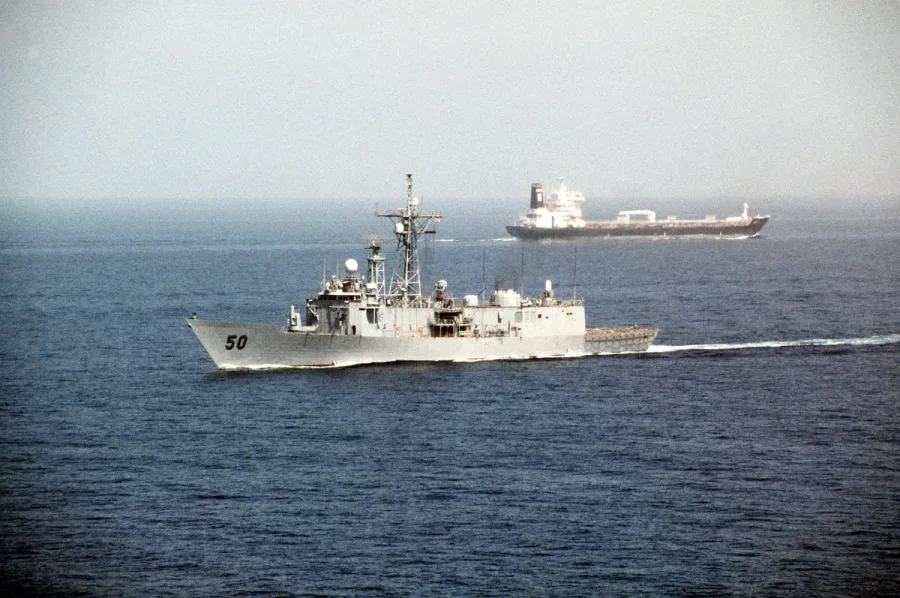
Iran has threatened to close the Strait of Hormuz in previous crises and usually stopped short of making good on the threat. This time was different. From early March, Iranian forces declared the waterway “closed”. IRGC commanders warned ships not to pass; one of the starkest public threats, reported on 2 March, was that forces would “set fire to any ship” that tried, according to Emirates NBD Research. The warning was backed by force. The UK Maritime Trade Operations centre logged ten attacks on ships by 8 March, with crew killed aboard two vessels. Commercial traffic inside and outside the Strait effectively froze. War-risk insurance premiums leapt several times over, and many owners simply would not sail.
That is why the barrel price kept climbing even when some crude later found alternative routes. In peacetime, about 20 million barrels a day of oil and products move through Hormuz. The IEA said that in the early phase of the conflict, export volumes of crude and refined products through the strait fell to less than 10% of pre-war levels. Gulf producers faced a brutal arithmetic: if tankers cannot leave, storage fills up, and production has to be cut. Analysts warned that a prolonged shut-in could push Brent toward $120 a barrel or beyond. Within weeks those warnings looked conservative. Brent broke $100, then — as BBC analysis of the wider spike noted — peaked above $120 in April. Every $10 on the barrel typically feeds through as roughly 7p a litre at the UK pump, so a wholesale jump of that size was always going to rewrite forecourt prices.
President Donald Trump answered the shipping freeze with assurances of his own. In early March he ordered political-risk insurance for maritime trade and said the US Navy could escort commercial vessels through the Strait “if necessary”. The aim was to reopen the energy artery and talk prices down. Shippers were less convinced. Escorts help at the margin, they argued, but owners need a sustained stretch without attacks before they will send tankers back in volume — and there were not enough warships to convoy the normal traffic of the Gulf. While Washington talked of restoring free transit, Tehran treated Hormuz as leverage: keep the strait disrupted until its conditions were met. Later in the war, Iranian officials were still saying the waterway would not fully reopen until US demands around blockades, assets and security were settled. That political tug-of-war — Iranian closure threats and attacks on one side, American escort promises and naval pressure on the other — became the daily weather system of the oil market.
Traders priced the fear as much as the barrels. When peace looked possible, oil fell hard. When talks failed or shipping was hit again, it leapt. A June framework deal between the US and Iran briefly cooled the market: Brent slipped back toward $70 and UK pump prices eased. Once that deal frayed and Hormuz risk returned, crude climbed again toward about $100. By early October, even as some Gulf crude flows recovered toward pre-war levels under US-protected routes, refined products remained constrained and the threat premium never fully left the price. Diesel at UK pumps crossed £2 a litre on the same day the G7 scrambled another emergency response.
Why diesel took the hardest hit
Crude is only half the story. Diesel is harder to refine than petrol, harder to replace when refineries are damaged or offline, and harder to cut back on because it powers freight, farming and much of the working day. The BBC and RAC have both stressed that while crude flows through Hormuz have been recovering, refined products — the fuels that actually go into tanks — have stayed tighter. Refined products are more flammable and riskier to move in a war zone; damage to regional refining capacity has left a scar that crude shipments alone cannot heal.
Britain is especially exposed. The UK’s remaining refineries make more than enough petrol for domestic demand, but not enough diesel. Closures at Grangemouth and Immingham last year deepened that imbalance. More than half of the diesel used here is now imported. Around 17% of total UK diesel supply comes from the United States — a useful share in normal times, and a vulnerability when Washington starts talking about keeping product at home. BBC News has a clear explainer of how that import dependence fed the £2 breakthrough.
Layered on top of the Middle East shock is a thinner global diesel market. Ukrainian attacks on Russian refineries have constrained output. Russia has restricted its own diesel exports. China has limited refined-fuel exports. Countries that once bought Russian diesel have had to compete elsewhere for the same barrels. The result, as the RAC’s Simon Williams put it, is more buyers chasing less diesel — and a UK pump price that has now overtaken the previous nominal record of 199.09p set in June 2022.
Westminster’s response
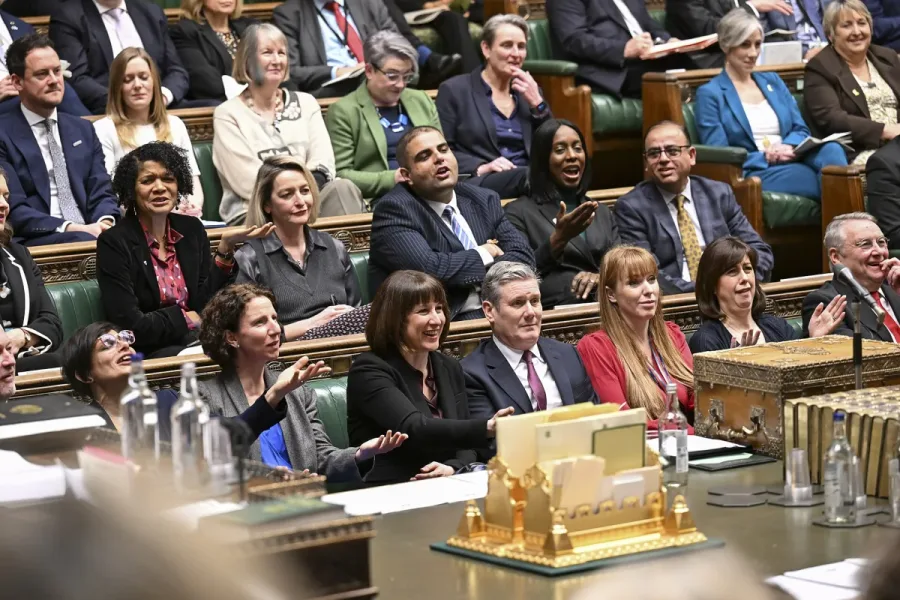
In May, with prices still elevated and the conflict unresolved, the government moved on tax. Prime Minister Keir Starmer announced that a planned phasing-out of the temporary 5p fuel-duty cut — due to begin in September — would be postponed until the end of December 2026. Chancellor Rachel Reeves framed it as targeted help for drivers and businesses hit by the Iran war: fuel duty kept at its lowest rate for more than 16 years; a further cut to red diesel for farmers and other users; and a 12-month road-tax holiday for hauliers, reducing renewal to £1 and saving up to £912 on the largest vehicles. BBC News covered the Commons announcement and the politics around it.
It was a real cost-of-living intervention, and it stopped an extra tax rise from landing on top of a war premium. It did not reverse the wholesale shock. Duty is only one slice of the pump price, and as prices kept climbing into autumn the RAC and others were already looking ahead to the Budget, arguing for a deeper duty cut or a VAT reduction if households and firms were to get meaningful relief.
Ministers have also tried to calm talk of empty forecourts. Transport minister Keir Mather and government spokespeople have insisted UK diesel supply is “robust” and “resilient”, with a diverse set of import routes — including important flows via the Netherlands — and no cause for panic buying. That distinction matters: this has been a price crisis more than a physical shortage. The pain is in the receipt, not necessarily in the pump running dry.
Internationally, the first big collective answer came quickly. On 11 March, IEA member countries agreed the largest coordinated release of emergency oil stocks in the agency’s history: 400 million barrels. It cushioned the early panic. It could not, on its own, reopen Hormuz or rebuild lost refining capacity.
Trump, diesel exports and the G7 deal

By late September and early October a second American threat hung over the market — this time not about opening Hormuz, but about closing the US diesel tap. As American pump prices rose ahead of the November midterms, President Trump floated a ban on US diesel exports. Treasury secretary Scott Bessent pressed Europe to put more of its own stocks onto the market. For Britain, which relies on US barrels for a meaningful share of its diesel, the threat risked another leg up in an already record pump price.
On 2 October — the same day UK diesel averages crossed £2 — G7 leaders held an urgent virtual meeting chaired by French president Emmanuel Macron. The UK was represented by Foreign Secretary Ed Miliband. The outcome, set out in the G7 leaders’ statement, was a coordinated release through the IEA of 100 million barrels of oil and diesel over four months, including a “frontloaded substantial diesel release” within the first 20 days. Leaders also pledged to refrain from energy export restrictions between G7 countries, to coordinate refinery maintenance so capacity is not taken offline all at once, and to push for more refining of diesel where possible. BBC News reported how the deal followed Trump’s export-ban pressure — and his later claim that a ban was “never really on the table”.
Markets wobbled: Brent briefly dipped below $100 before firming again on fresh regional risk. The G7 statement condemned Iranian disruption of energy security, called for full restoration of navigation through Hormuz, and left the door open to further diesel releases if needed.
What this means on the road
For high-mileage drivers, the RAC’s arithmetic is blunt. At roughly 20p a mile for an average 45mpg diesel car, 10,000 miles a year means about £2,020 on fuel alone — and many working drivers cover far more than that. Haulage, delivery, farming and sole traders sit in the same squeeze. Even households that never buy diesel feel it through food and goods that move by truck.
Fuel retailers have denied profiteering; the markets regulator has said it has not seen evidence of stations actively changing pricing strategies to exploit the crisis. None of that changes the core problem: wholesale diesel is scarce relative to demand, Britain imports most of what it burns, and regulated or contracted fares — including in parts of the taxi trade — often move more slowly than the forecourt. For a live sense of how fast prices are still moving, the RAC’s Fuel Watch pages remain one of the clearest public trackers.
Where things stand now
As of early October 2026, the picture is this. Diesel is at a record average of just over £2 a litre. Petrol is at a four-year high, though still below its 2022 peak. Brent is still roughly $100 a barrel — far above the low-$70s world that existed before the first strikes — because the market is still pricing Hormuz risk, damaged refining and thin product trade as much as today’s tanker count. The immediate diplomatic win is that a US diesel export ban appears off for now, and fresh G7/IEA barrels are supposed to reach the market quickly. The longer Iranian threats, shipping attacks and American counter-pressure keep the strait politically contested, the longer that risk premium stays in the barrel — and the longer UK diesel stays painfully expensive.
For the taxi and private hire trade, the practical questions are familiar and urgent: how long can elevated diesel be absorbed before tariffs, operator pricing or working patterns have to change; whether the October Budget brings further duty or VAT relief; and whether the G7’s diesel release shows up at UK pumps before another Hormuz scare wipes the gain away.
The £2 litre is a milestone nobody wanted. Getting back below it will take calmer shipping lanes, healthier refining, and politics that keeps product moving across borders instead of trapping it at home.