

Passengers often assume every licensed driver has done the Knowledge, speaks fluent English, drives to advanced-driver standards and could deliver first aid if someone collapses in the back. Drivers know the truth is messier: some of that is law, some is national guidance, some is local policy, and some is simply what the trade expects of itself.
This feature separates required standards from expected ones — driving skill, navigation, language and first aid — and asks who sets them: government, licensing authorities, the industry, or passengers.
The legal baseline
Across Great Britain you need a local licence to drive a taxi (hackney carriage) or private hire vehicle — but the statute and guidance behind that licence are not the same everywhere.
In England and Wales the shared starting point is set out on GOV.UK: right to work; usually a full British, Northern Ireland or EU driving licence held for at least 12 months; and being a “fit and proper” person, typically checked with an enhanced DBS disclosure. Outside London you apply to the council for the area you want to work; in London the licensing authority is Transport for London. Authorities may also require a medical, a knowledge test and a driving assessment. That is a statutory floor, not a GB-wide skills syllabus: there is still no single national exam covering navigation, English or first aid.
Wales uses the same underlying England-and-Wales licensing legislation for now — taxi and PHV licensing is devolved under the Wales Act 2017, but new Welsh primary legislation has not yet replaced the old framework. Welsh ministers have published licensing guidance urging councils to harmonise policies, and a 2023 white paper on a Taxi and Private Hire Vehicle (Wales) Bill proposed national minimum standards, stronger enforcement and better information sharing. Until that lands, Welsh authorities still set local conditions and must have regard to the UK government’s Statutory taxi and private hire vehicle standards, which apply in Wales until Welsh law supersedes them.
Scotland runs a separate regime under the Civic Government (Scotland) Act 1982. Local licensing authorities issue taxi and private hire car driver licences. By law an applicant must have held a licence entitling them to drive a motor car for the 12 months before applying; councils must refuse if the person is not fit and proper; and authorities may require a medical and a test of local knowledge and operation. Scottish Government best practice guidance backs vocational training and competence conditions, but councils still decide the detail — which is why Edinburgh can mandate multi-day skills training including first aid while another authority stays lighter.
Northern Ireland has its own process again, separate from Great Britain.
Two UK documents most strongly shape what “good” looks like for English (and, for the statutory standards, Welsh) authorities:
- The Statutory taxi and private hire vehicle standards (2020), issued under the Policing and Crime Act 2017. Licensing authorities must have due regard to them. They are strongest on safeguarding, suitability and English language proficiency.
- The best practice guidance for licensing authorities in England, last updated 17 November 2023. It is non-statutory advice on disability awareness, topographical tests, driver proficiency and more. Councils decide how far to follow it — and they diverge.
The practical point for drivers: your licence conditions are local. The expected professional bar is increasingly set by national guidance — but which guidance applies depends on whether you are licensed in England, Wales or Scotland.
Driving skill: what is required, what is expected
The only universal driving qualification is a full car licence. There is no national taxi equivalent of a PCV or HGV practical test.
DfT’s best practice guidance for England goes further. It says taxi and PHV drivers should display a higher degree of aptitude and diligence than private motorists, and that authorities should require training and/or assessment focused on attitudes and behaviours — naming IAM RoadSmart and RoSPA style courses — at first grant and typically every three years on renewal. Where complaints raise specific concerns, a practical ability course is appropriate.

That is expected professional standard in Whitehall’s view. It is not a criminal-law requirement to hold an advanced-driving certificate before you can work. Many councils already require a driving assessment or approved training; others still rely mainly on the DVLA licence plus medical fitness. DfT also expects Group 2 medical standards — the same medical bar used for lorry and bus entitlements — because drivers carry the public for long hours and may assist disabled passengers. Scottish and Welsh authorities commonly take a similar medical line, even where the England best practice document does not formally bind them.
Passenger expectation sits higher again: smooth driving, no phone use, calm under pressure. Licensing can punish poor behaviour through complaints and conditions. The ordinary driving test never tested professionalism for hire and reward.
Navigation and local knowledge
Here the gap between taxi and private hire — and between London and everywhere else — is widest.
DfT is clear in the 2023 best practice guidance for England. Taxi drivers need a good working knowledge of their licensed area because they can be hired immediately at ranks or in the street and cannot prepare a route. Authorities should therefore require a local topographical test before first grant, scaled to how complex the area is, without building an unnecessary barrier to entry.
For private hire, the same guidance says the opposite: licensing authorities should not require topographical or navigational tests. Journeys are pre-booked; the operator should collect pick-up and drop-off details; the driver can plan the route or enter it in a sat nav. The government’s consultation response explicitly moved to that position because of limited benefit and the reliability of modern navigation.
London still sits apart. The Knowledge of London remains the world’s hardest local-knowledge exam for taxi drivers — roughly 25,000 central streets and 100,000 points of interest on the green-badge All London route, with suburban yellow-badge alternatives. London Assembly answers have long called it the gold standard. Private hire applicants take a separate computer-based topographical assessment covering map reading, route planning and places — deliberately not Knowledge level, because PHV work is booked in advance.

Outside London, practice is catching up with DfT. In June 2025, Bristol City Council’s licensing officers recommended stripping pubs, hotels, districts and places-of-interest questions from the private hire knowledge test after citing the DfT guidance and noting that only eight of 133 PH tests that year had been passed — a high barrier for work that relies on sat nav. Hackney carriage testing was left intact because street-hail drivers still need local geography.
In Scotland, section 13 of the 1982 Act expressly lets authorities test knowledge of the area, road layout and other operational matters for taxi and private hire car drivers. Many Scottish councils still run some form of knowledge or locality test; the intensity varies by city and policy, not by a UK-wide syllabus. Welsh councils likewise set their own knowledge requirements under local policy while national minimum standards remain a reform ambition rather than live law.
Industry opinion splits along trade lines. The Licensed Taxi Drivers’ Association has repeatedly defended the Knowledge against “dumbed down / replaced by sat nav” stories, arguing any review must keep the gold standard that sets London taxis apart. Private hire drivers and many operators increasingly treat sat-nav competence, traffic-app literacy and destination confirmation as the real professional skill — not memorising every hotel postcode.
Expected standard for a taxi: know your patch well enough to take the fare without fumbling. Required standard for a PHV under DfT best practice in England: no topo test. Required standard in many councils until recently: still a knowledge paper. Check your own handbook.
English language
Language is one of the few areas where national statutory standards bite hard in England and Wales.
The statutory standards say a licensing authority’s test should cover oral and written English. Written skill matters so drivers can understand safeguarding documents and spot exploitation. Oral skill matters for talking to passengers and reading situations. Best practice adds the passenger benefits: confirming destination, estimating journey time, handling common requests, writing a legible receipt.
London has turned that into a hard rule. New London PHV drivers must meet CEFR B1 in speaking, listening, reading and writing — assessed through a speaking and listening test plus the Safety, Equality and Regulatory Understanding (SERU) assessment based on TfL’s PHV Driver Handbook. From April 2023, new applicants had to pass both before licensing, alongside the topographical assessment.
Elsewhere in England and Wales, methods vary: formal language tests, interview assessments, or English modules inside a local knowledge paper. Scottish authorities assess communication as part of fit-and-proper and local training policies rather than under the English statutory standards document. The Institute of Licensing has pushed for national minimum standards partly because English and training expectations still differ between authorities, feeding “licence shopping” and uneven public confidence.
Passenger expectation is blunt: clear communication about fares, routes and safety. Required standard in England and Wales: oral and written English assessed somehow, with London B1 the clearest published benchmark. Expected standard in the trade: enough English to de-escalate conflict, explain a diversion and understand a licensing letter without a translator.
First aid
First aid is where expectation and requirement diverge most sharply.
There is no UK-wide statutory rule that taxi or PHV drivers must hold a first-aid certificate. DfT’s statutory standards and England best practice guidance put weight on safeguarding, disability awareness and driving behaviour — not bandages and CPR cards.
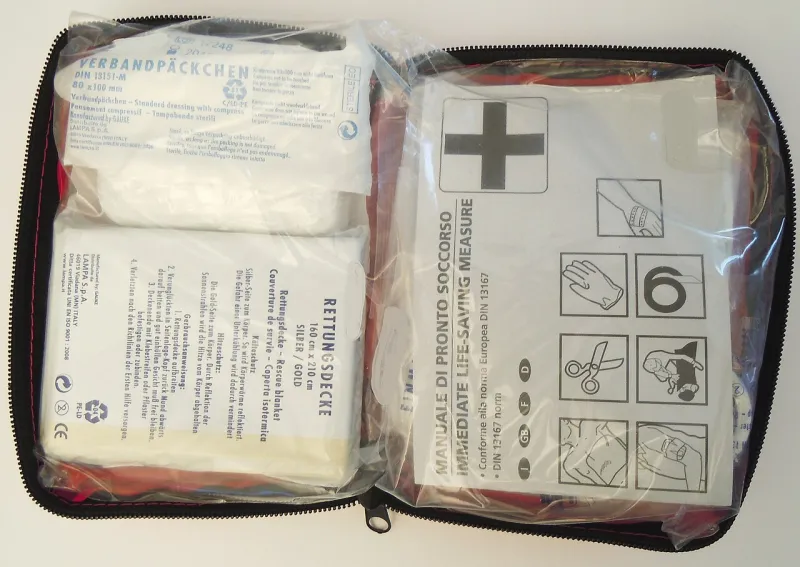
Some authorities go further locally. Edinburgh’s mandatory Driver Skills Development Programme for renewing taxi and private hire car drivers includes a first-aid module covering incident assessment and managing unresponsive casualties. Watford’s professional driver handbook is more typical of English advice: you do not have to provide first aid to customers, but the skills help with school and hospital contracts and make you more useful at a roadside emergency.
The Highway Code and ordinary duty of care still apply. If you are trained, helping can be valuable. If you are not, your job is to call the emergency services, make the scene safer and not make things worse. Inventing a national first-aid licence condition that does not exist will not help you at the roadside — or in a disciplinary hearing.
Expected by many passengers and some contractors: yes. Required nationally: no. Required locally: only where your council or operator says so.
The skills national guidance does want on the list
Two other competence areas now sit closer to “expected national standard” than first aid — especially in England and Wales.
Safeguarding training is required under the statutory standards: drivers should understand how to spot and report child sexual exploitation, county lines and abuse of vulnerable adults. Disability awareness training or assessment is pressed hard in the 2023 England best practice guidance, covering Equality Act duties, wheelchair assistance, assistance dogs and communication with passengers who have visible and less visible impairments. DfT also points councils to the REAL disability equality training programme as a foundation. Welsh guidance likewise puts public safety and consistent suitability at the centre of interim reform; Scottish best practice encourages vocational training that raises competence and customer service.
Those are not “soft skills”. They are safety and equality expectations that licensing authorities are under pressure to enforce — including after complaints of discrimination.
Who sets the standards?
National and devolved governments set the frameworks and issue statutory or best-practice guidance. None of them yet runs a single Great Britain-wide driver skills test for taxis and PHVs.
Local licensing authorities (and TfL in London) turn that into licence conditions, test syllabuses and enforcement. That is why one English city can scrap PHV topo questions while another still examines pub locations; why a Scottish city can mandate first-aid training on renewal; and why Welsh reform talks about national minimum standards that do not yet exist in primary law.
The industry sets reputation. Taxi associations sell the Knowledge and professional driving as brand. Private hire operators sell punctuality, app tools and customer rating. Unions and trade bodies argue about barriers to entry versus public safety. Passengers set the informal bar every time they complain — or tip.
The Institute of Licensing and many councils want national minimum standards so the floor is consistent. Until legislatures deliver that — whether at Westminster or in Cardiff — “required” still means whatever your licensing authority’s policy says, read against the guidance that applies in your nation.
What this means on the road
For a working driver, the useful split is:
- Must have: valid hire licence, fit-and-proper status, medical fitness to the local/Group 2 standard where required, and whatever English, safeguarding, disability and knowledge assessments your authority actually mandates.
- Should have if you drive taxis: solid local knowledge to the standard your council or TfL tests.
- Should not be forced to have for PHV under DfT best practice in England: a sat-nav-era topographical memory test — though your council may not have updated yet.
- Nice to have / contract-critical: advanced driving habits, first aid, BSL basics, and the customer craft that never appears on a licence card.
If you are applying or renewing, read your authority’s current handbook, not last year’s WhatsApp rumour. If you are arguing policy, separate criminal law from statutory guidance from local condition — they are three different levers, and the guidance stack changes at the England, Wales and Scotland borders.
The public’s mental picture of a “proper cabbie” still owes a lot to the London Knowledge and to an older idea of the all-round professional. The licensing system is slowly rewriting that picture: safer behaviours, clearer English, disability competence and less rote geography for pre-booked work. First aid remains optional almost everywhere. Driving like a professional is expected everywhere — even when the only mandatory proof is still a full car licence and a local stamp.